Healthy Flapjack Recipe with Banana and Dates
By Michael
Yes, you can make flapjacks with no refined sugar at all. These bars are sweetened with ripe banana and dates instead of sugar and golden syrup, use less fat than the classic, and still come out soft and chewy. What they are not is sugar-free — fruit carries its own sugars, and this page will not pretend otherwise.
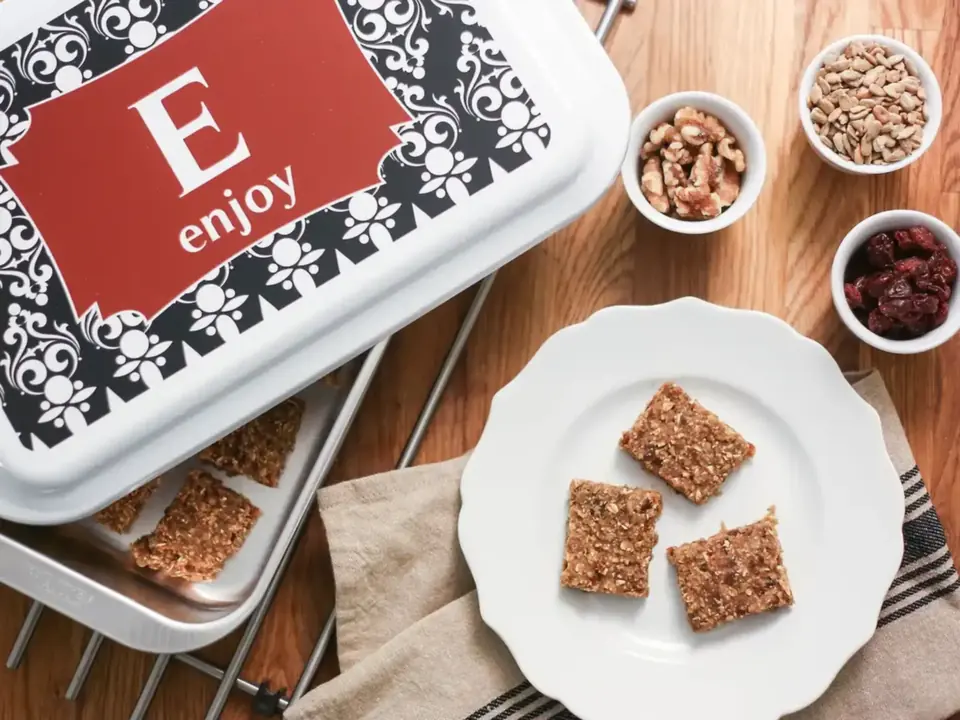
The healthy flapjack recipe
- Prep: 15 min
- Cook: 30 min
- Total: 45 min
- Makes: 12 bars
Oven: 170°C (150°C fan) / Gas Mark 3. You need a 20cm square tin, lined with baking paper.
Draft recipe: worked out from cross-checked published recipes and not yet kitchen-tested by us. Times are a guide — use the cues in each step.
Ingredients
About the honey: it is there for readers who want a little more sweetness and a firmer set. Add it and the bars are still free of refined sugar, but they are no longer sweetened by fruit alone. Leave it out and the recipe works exactly as written below.
Method, step by step
Heat the oven and line the tin. Heat the oven to 170°C (150°C fan / Gas Mark 3). Line a 20cm square tin with baking paper, leaving some paper overhanging two sides so you can lift the slab out later.
Soak the dates. Put the dates in a small bowl and cover them with warm water. Leave them for 10 minutes. Soft dates blend into a smooth paste; hard, dry dates stay in lumps and the bars set unevenly.
Blend the dates into a paste. Lift the dates out of the water and blend or mash them with 2 tablespoons of their soaking water until you have a thick, spoonable paste. A stick blender does this in seconds. A fork works too — it just takes longer and the paste stays a little rougher, which is fine.
Mash the banana. Mash the banana in a large bowl with a fork until it is mostly liquid with a few small lumps. Ripe bananas with brown spots on the skin mash easiest and taste sweetest. Pale, firm bananas give a starchy result and less sweetness, so save those for something else.
Melt the fat and mix the wet ingredients. Melt the coconut oil or butter in a large pan on a low heat. Take the pan off the heat and stir in the mashed banana, the date paste, the cinnamon and the salt. If you are using the honey, stir it in now. The mixture will look loose and a little separated. That is normal — the oats bring it together.
Stir in the oats and raisins. Tip the oats and the raisins or seeds into the pan and stir until every oat is coated and there are no dry pockets at the bottom. Leave the mixture to stand for 5 minutes. The oats drink up some of the moisture, and the mixture firms up enough to press neatly.
Press into the tin. Spoon the mixture into the lined tin and spread it into the corners. Press down firmly all over with the back of a spoon or the base of a glass. Fruit-sweetened mixtures have less syrupy glue than the classic, so firm, even pressing is what holds these bars together.
Bake until just golden. Bake for 25 to 30 minutes, until the edges are golden and pulling very slightly away from the sides, and the centre looks set but still feels soft when pressed gently. Do not wait for the middle to feel firm — it firms up as it cools, and baking until it feels hard in the oven gives you hard bars.
Cool in the tin, then cut. Leave the slab to cool in the tin for at least 30 minutes. Score the cutting lines with a knife after 10 minutes, while it is still warm, then cut all the way through once it has cooled and set. Lift the slab out with the paper and cut into 12 bars.
What "healthier" honestly means here
Let us be straight about this, because a lot of healthy flapjack recipes are not. These bars contain no refined sugar and no golden syrup, and they use about half the fat of our classic flapjack recipe. The sweetness comes from banana and dates. That is a real difference, and it changes the bars: they are softer, darker and less sweet, with a gentle fruit flavour rather than a toffee one.
But fruit sugar is still sugar. Dates and bananas carry natural sugars, and your body treats them much the same once eaten. So the honest claim for this recipe is "no refined sugar, less fat, more fibre and fruit" — not "sugar-free" and not "guilt-free". If you want a flapjack with less added sweetness and ingredients you can pronounce, this is a good recipe. If you want the classic toffee chew, it is not hiding on this page; it is in the classic recipe, and there is no shame in making that one instead.
We also publish no nutrition figures for these bars yet. Numbers get added only when they have been worked out properly from the final ingredients, and we would rather leave the space blank than put a tidy-looking guess in it.
The swaps, side by side
Every change in this recipe trades something. This table shows what you gain and what you give up, so you can pick the swaps that matter to you and skip the rest.
| Classic ingredient | The swap used here | What changes |
|---|---|---|
| 175g golden syrup | 150g dates, blended to a paste | No refined sugar. The bars bind well but set softer, and the flavour turns fruity rather than toffee-like. |
| 175g light muscovado sugar | 200g ripe banana | Less sweetness overall, more moisture. The crumb stays soft and the bars go stale faster than the classic. |
| 175g butter | 75g coconut oil or butter | Roughly half the fat. The set is a little firmer once cool, so slice with a sharp knife rather than tearing. |
| Nothing on top | 50g raisins or seeds stirred through | Extra chew from raisins, or a little crunch and staying power from seeds. Both are optional. |
| No spice | 1 tsp cinnamon | Warmth that makes the bars taste sweeter than they are. It earns its place in a low-sugar recipe. |
One swap we do not recommend: replacing the fat with more banana. Banana is mostly water, and too much of it turns the mixture into a soft oat pudding that never sets into bars. The 75g of fat is doing real work here — it coats the oats and helps the slab hold together.
What each swap does to the texture
Dates are the binder. Blended with a little of their soaking water, they form a sticky paste that coats the oats the way syrup does in the classic recipe. The difference is water: syrup is almost all sugar, while date paste carries water too, so the set is softer and the bars are best eaten within a few days.
Banana softens. It adds moisture and a gentle sweetness, and it keeps the crumb tender. It also means these bars do not crisp at the edges the way the classic does. If you like a firmer bar, bake at the longer end of the time and cool them completely before cutting — most of the firming happens in the tin, not the oven.
Less fat means a firmer, cleaner bite once the bars are cold, especially if you use coconut oil, which sets hard at room temperature. Butter gives a softer set. Neither is better; it depends on whether you want a bar that snaps a little or one that bends.
If banana is the part you love most, our banana flapjack recipe leans into it fully — three bananas, a stronger banana flavour and a little added sugar for a better set. And if you need the bars dairy-free as well as refined-sugar-free, use coconut oil here, or see the vegan flapjack recipe, which compares all the dairy-free fats properly.
Making them for children and lunchboxes
These are the bars most parents who write to us are actually after: something for a lunchbox that is sweet enough to be eaten and plain enough to be allowed. A few practical points. Cut them smaller than you would for adults — six of the twelve bars cut in half again gives 24 lunchbox-sized pieces. Use seeds rather than whole nuts, and check your school's nut policy before sending anything with nut ingredients; this recipe contains no nuts as written.
For toddlers, the texture matters more than the ingredients. These bars are soft but dense and chewy, so cut them into thin fingers, keep pieces small, and stay nearby while they eat, as you would with any chewy food. Leave the honey out for babies under 12 months — honey is not recommended for that age group. With the honey left out, the recipe is suitable for the whole family.
More ways to change the bars — including chocolate, fruit and no-bake versions — are gathered on the flapjack variations page.
Keeping and freezing
Store the bars in an airtight tin at room temperature and eat them within 3 days. They keep a day or two longer than that without doing you any harm, but the banana in the mixture means they soften and then stale faster than classic flapjacks, which keep for a week or more. There is no need to keep them in the fridge, and chilling makes coconut-oil bars hard and dull.
They freeze well. Wrap the bars individually, freeze for up to a month as a guide, and defrost at room temperature for an hour or so before eating. Freezing is a good answer to the shorter keeping time: bake a batch, freeze half, and you always have some ready.
One last honesty note. If your household gets through flapjacks slowly, the classic recipe is honestly the better keeper. This recipe's strength is what is in it, not how long it lasts.
Questions people ask
Classic flapjacks are a treat: oats are a good, filling base, but the bars are held together with butter, sugar and syrup. These banana and date bars are a healthier version — no refined sugar, about half the fat, and fruit and fibre in place of some of the sugar. Healthier is the right word. No flapjack is a health food, and any recipe that tells you otherwise is selling you something.
Yes — the recipe is written to work without it. The honey is an optional extra for a little more sweetness and a slightly firmer set. Leaving it out makes the bars softer and less sweet, and it is the version to make for babies under 12 months, who should not have honey at all.
No. The banana and date paste carry moisture that the classic's sugar and syrup do not, so these bars are at their best within 3 days in an airtight tin, while classic flapjacks keep well for a week or more. If you need them to last, freeze half the batch and defrost bars as you want them.
Yes. Defrost it fully first and pour off any watery liquid that separates out, or the mixture becomes too wet and the bars stay soggy in the middle. Frozen bananas are often riper and sweeter than fresh ones, which suits this recipe well — weigh them after peeling, once defrosted.
With the honey left out, yes, with the usual care. The bars are soft but dense and chewy, so cut them into small, thin fingers and stay with your child while they eat. Make the honey-free version for any child under 12 months, as honey is not recommended for babies of that age.
Yes — as written, the recipe contains no nuts at all. Choose raisins rather than seeds if you prefer, and always check the labels on your oats and dried fruit, as packing lines sometimes carry nut warnings. If you swap the coconut oil for butter, the recipe stays nut-free; coconut itself is treated as a nut by some schools, so check the policy if the bars are for a lunchbox.