
Easy Flapjack Recipe with Four Ingredients
By Michael
This is the simplest flapjack recipe we know: butter, light brown sugar, golden syrup and porridge oats, melted together in one pan, pressed into a tin and baked. Four ingredients, no mixer, no separate bowls, and soft, chewy bars in about 35 minutes from start to finish.
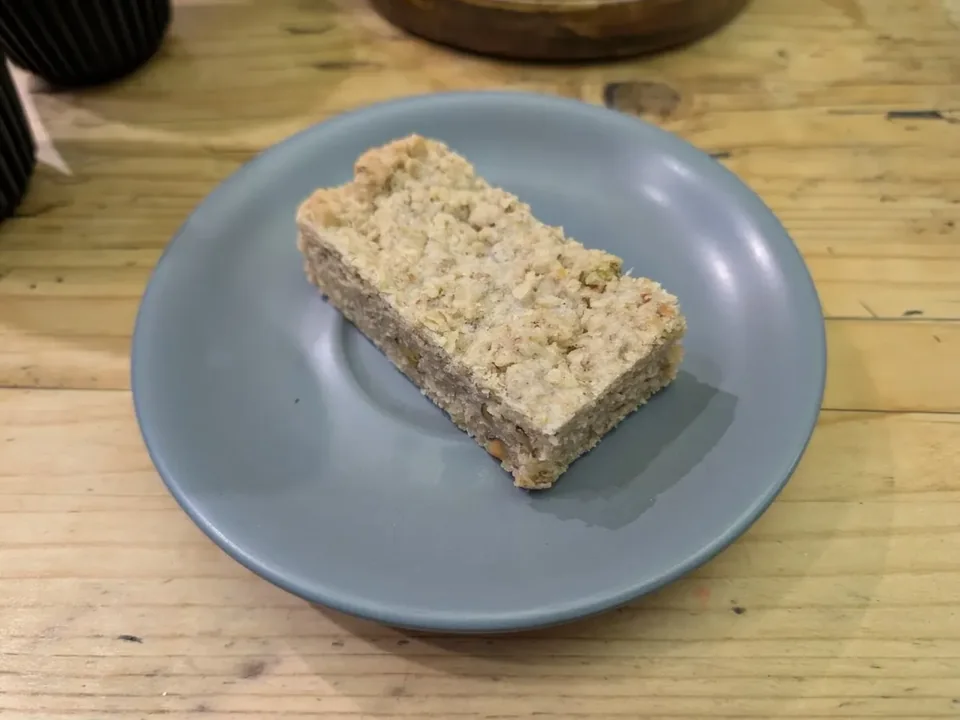
The easy flapjack recipe
- Prep: 10 min
- Cook: 20 min
- Total: 35 min
- Makes: 12 bars
Oven: 170°C (150°C fan) / Gas Mark 3. You need a 20cm square tin, lined with baking paper.
Draft recipe: worked out from cross-checked published recipes and not yet kitchen-tested by us. Times are a guide — use the cues in each step.
Ingredients
Method, step by step
Heat the oven and line the tin. Heat the oven to 170°C (150°C fan / Gas Mark 3). Line a 20cm square tin with baking paper, leaving paper overhanging two sides. The overhang is your handle for lifting the slab out later, and it means no prising with a knife.
Melt the butter, sugar and syrup. Put the butter, sugar and golden syrup in a large pan — large enough to hold the oats later, so everything happens in one pan. Set it over a low heat and stir now and then until the butter has melted and the sugar has dissolved into it. The mixture should look smooth and glossy. Do not let it boil: boiled syrup sets like toffee and gives you hard flapjacks.
Stir in the oats. Take the pan off the heat. Tip in the oats and the salt, if you are using it, and stir until every oat is coated and shiny and there are no dry patches hiding at the bottom of the pan. This is the step to take your time over — dry oats mean crumbly bars.
Press into the tin. Spoon the mixture into the lined tin and push it into the corners. Then press down firmly all over with the back of a spoon, a spatula or the base of a glass. Press harder than feels necessary. The bars hold together because they were pressed, not because of anything in the ingredients.
Bake for 20 minutes. Bake for 20 minutes, until the edges are golden and the top looks set but the centre still gives slightly when you press it gently. Soft in the oven means chewy on the plate — flapjacks firm up a lot as they cool. If the middle looks firm and dry in the oven, they will be hard bars.
Score, cool and cut. Leave the slab in the tin for 10 minutes, then score the cutting lines with a knife to mark 12 bars. Leave it to cool completely in the tin — about 30 minutes — then lift it out with the paper and cut along the scored lines. Cutting while hot is the most common reason easy flapjacks fall apart.
Why this is the easy version
Plenty of flapjack recipes add steps that do nothing: creaming butter and sugar as if you were making a cake, whisking in eggs, resting batters, two bowls and a sieve. Flapjacks need none of it. The classic recipe on this site — the flapjack recipe on our homepage — uses weighed syrup and muscovado sugar for the deepest toffee flavour. This easy version trades a little of that depth for speed and simplicity: the syrup is measured in spoonfuls, the sugar is the bag most people already have, and the whole thing is mixed in the pan it melts in. One pan, one tin, one spoon to wash.
It is also the most forgiving version for a first attempt, provided you respect the three things in the mistakes section below. Beginner flapjacks almost never fail because of the ingredients. They fail because the syrup boiled, the pressing was too gentle, or the bars were cut while hot. All three are fixed inside the method above, so read those steps properly and the recipe mostly looks after itself.
Hob or microwave? The honest comparison
You can melt the butter, sugar and syrup in the microwave instead of on the hob. Both work. Here is what actually differs.
| Hob method | Microwave method | |
|---|---|---|
| Time to melt | About 5 minutes on a low heat | About 2 to 3 minutes, in 30-second bursts |
| Washing up | One large pan and a spoon | One large microwave-safe bowl and a spoon — the oats go in the same bowl |
| Control | You can see the sugar dissolve and stop before it boils | Harder to judge; syrup overheats quickly in spots, which can mean hard patches in the finished bars |
| Best for | First attempts, and anyone whose flapjacks came out hard last time | Confident bakers in a hurry, and kitchens where the hob is busy |
Our advice: use the hob the first time you make these, so you can see what melted-but-not-boiled looks like. Once you know the look of it, the microwave shortcut is safe enough — short bursts, stir between each one, and stop as soon as everything has melted together.
Baking with children: the safe jobs and the hot jobs
This is a good recipe to make with children because there is no sharp work and no raw egg to worry about. It still has a pan of hot melted sugar in it, and melted sugar is the one genuinely dangerous thing in a flapjack kitchen — it is hotter than boiling water and it sticks. So split the jobs by age and keep the split firm.
Jobs children can do: weighing the oats and sugar, lining the tin (paper wrestling is a real skill), stirring the oats into the mixture once the pan is off the heat and an adult is holding it steady, pressing the mixture into the tin with the back of a spoon once it has cooled for a couple of minutes, and scoring nothing but deciding everything about how the bars get divided up afterwards.
Jobs for adults: everything at the hob, carrying the pan, putting the tin in and out of the oven, and the final cutting with a proper knife. A child can stir the pan on the hob only if they are old enough to be trusted at a hob generally — the recipe does not change that judgement.
One practical tip: put the oats in a bowl before you start, even though it breaks the one-pan rule. Small hands pouring from a big bag into a hot pan is how oats end up on the floor and everywhere else.
The three beginner mistakes
1. Boiling the syrup mixture. Once the butter, sugar and syrup boil, the sugar starts to set like toffee as it cools, and the bars come out hard enough to test your teeth. Keep the heat low, be patient, and take the pan off as soon as everything has melted and the sugar has dissolved. If your flapjacks came out hard, this is the first place to look.
2. Pressing too gently. A loose, lightly patted mixture bakes into a tray of crumbs. The oats need to be packed tightly, with real pressure, right into the corners. Use the base of a glass if a spoon feels flimsy, and press a second time halfway through if the surface still looks springy.
3. Cutting while hot. Warm flapjack has almost no structure — the butter and syrup that will set it are still liquid. Score the lines early, by all means, but wait until the slab is completely cool before you cut through and lift bars out. Given 30 minutes in the tin, the same mixture cuts into clean, firm bars.
Get those three right and this recipe is hard to spoil. If chew is the thing you care about most, the chewy flapjack recipe takes the texture further with condensed milk and a timed bake. For every other variation — chocolate, honey, fruit and more — see the flapjack variations page.
Small batches and doubling
Halving: halve every ingredient and use a loaf tin or the smallest tin you have. The bake time stays roughly the same because the thickness is what matters — keep the mixture about the same depth as the full batch and check it from 15 minutes.
Doubling: double everything and use a large roasting tin, about 30cm by 20cm or bigger. Do not pile a double batch into the same 20cm tin: a slab that is too thick cooks at the edges while the middle stays raw and wet. Add 5 minutes or so to the bake and judge by the same signs — golden edges, centre just set.
Keeping: the bars keep in an airtight tin at room temperature for up to a week, and they freeze well for up to a month as a guide, wrapped individually. Defrost at room temperature for an hour before eating.
Questions people ask
Yes. Put the butter, sugar and syrup in a large microwave-safe bowl and heat in 30-second bursts, stirring between each, until everything has melted and the sugar has dissolved — usually 2 to 3 minutes in total. Stir the oats into the same bowl. Stop as soon as it has melted: microwaves heat syrup unevenly, and overheated pockets are the usual cause of hard patches in the bars.
Use it, at the same weight. The bars will taste a little less toffee-like and a little more plainly sweet, because light brown sugar carries molasses flavour that caster sugar does not. Demerara works too but dissolves more slowly, so give the mixture an extra minute of gentle heat and stir until you cannot feel grains against the pan.
Yes, with an adult on the hot jobs. Children can weigh, line the tin, stir the oats in once the pan is off the heat, and press the mixture down. Adults should handle the hob, the oven and the final cutting, because melted sugar is very hot and sticky. There is no raw egg in the recipe, which removes one of the usual worries.
Almost always the lining. A greased but unlined tin grips flapjacks hard because the sugar sets like glue as it cools. Line the tin with baking paper, leave paper overhanging the sides, and lift the whole slab out once cool. If a batch does stick, warm the base of the tin gently for a few seconds over a low hob ring or in a warm oven to soften the syrup, then try again.
Yes — halve every ingredient and bake the mixture in a loaf tin or small dish, keeping it at roughly the same depth as the full batch. The time barely changes; check from 15 minutes and take it out when the edges are golden and the centre is just set. Six smaller bars is often the right size for a small household.
For this recipe, yes, treat it as essential. The syrup and sugar set firm and sticky, and paper is the difference between lifting out a clean slab and chiselling at a tin. Reusable tin liners work just as well. Foil at a push, lightly greased — but paper is better, and it also makes washing up almost nothing.