
Chocolate Flapjack Recipe with a Dark Chocolate Top
By Michael
A chocolate flapjack is the classic golden oat bar under a proper layer of dark chocolate: butter, golden syrup and light brown sugar melted together, porridge oats pressed firmly into a tin and baked, then covered with 150g of melted dark chocolate. The main recipe below is the topped version, cut while the chocolate is just set so it slices cleanly instead of cracking — with chocolate chips folded in, or cocoa through the mix, as two easier routes to the same treat.
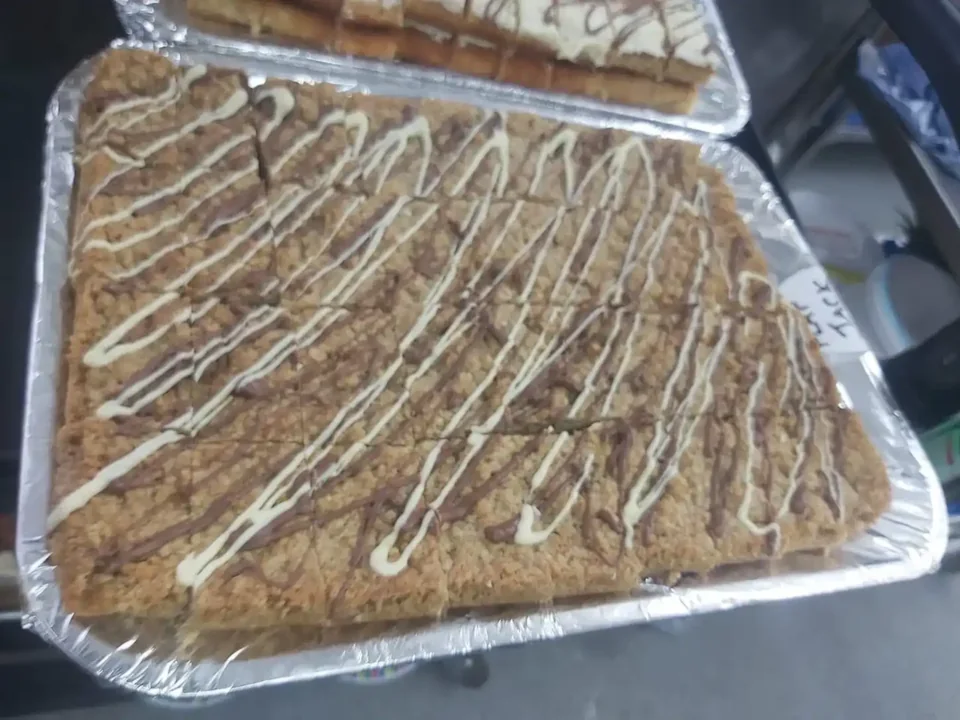
The chocolate flapjack recipe (topped version)
- Prep: 10 min
- Cook: 35 min
- Total: 45 min
- Makes: 12 bars
Oven: 160°C (140°C fan) / Gas Mark 3 — middle shelf. You need a 20cm square tin, lined with baking paper. Cooling and setting time comes on top of the total above.
Draft recipe: worked out from cross-checked published recipes and not yet kitchen-tested by us. Times are a guide — use the cues in each step.
Ingredients
Method, step by step
Heat the oven and line the tin. Heat the oven to 160°C (140°C fan) / Gas Mark 3. Line a 20cm square tin with baking paper, leaving paper hanging over two sides so the finished slab lifts out cleanly — a flapjack that has to be dug out rarely survives with its topping intact.
Weigh everything out. Weigh the oats into a large bowl. Break the dark chocolate into a heatproof bowl and set it aside for later — the base needs to bake and cool before the chocolate is melted, so there is no rush with it yet.
Melt the butter, syrup and sugar. Put the butter, golden syrup and light brown sugar in a large saucepan over a low heat and stir until everything has melted together and the sugar has dissolved. Take it off the heat as soon as it is smooth. Do not let it boil — boiled syrup sets like toffee and makes hard bars.
Stir in the oats. Add the oats and the pinch of salt to the pan and stir thoroughly until every oat is coated and shiny, with no dry patches hiding at the bottom. The salt matters more here than in the plain recipe: it keeps the chocolate version from tasting flatly sweet.
Tip the mixture into the tin. Scrape the mixture into the lined tin and spread it into the corners with the back of a spoon, roughly level all over.
Press down firmly. Press hard with the back of the spoon or the base of a glass until the surface is flat, compact and even, paying attention to the corners. A firm, even base carries the chocolate layer without it pooling in dips or sliding off thin spots.
Bake the base. Bake on the middle shelf for 30 to 35 minutes, until the edges are golden and the centre looks set but still slightly soft. The base should be a touch firmer than you would accept for a plain flapjack — it has to hold up under a knife later.
Cool the base completely. Leave the slab to cool in the tin for at least an hour, until it is fully cold and firm. Warm oats melt chocolate into a greasy soak rather than a clean layer, so this step cannot be hurried. Score the base lightly into 12 portions now if you like a cutting guide for later.
Melt the chocolate and pour it over. Melt the dark chocolate gently — a heatproof bowl over a pan of barely simmering water, or short bursts in a microwave, stirring often. Chocolate scorches and seizes easily, so keep the heat low and stop while a few lumps remain; the residual warmth melts them as you stir. Pour the chocolate over the cold base and tilt the tin, or use a palette knife, to spread it into an even layer right to the edges.
Score while just set, then cut. Leave the topping at room temperature until it has just set — it loses its wet shine and feels firm but still slightly soft under a fingertip, usually 15 to 20 minutes. Score deeply through the chocolate along your portions now, then leave until fully firm before cutting through the base. Cutting at the just-set stage is the whole secret to a clean top.
Topped, chipped or cocoa: which one should you make?
People searching for a chocolate flapjack usually picture one of three different bars, and each suits a different job. The topped version above is the bake-sale and gift bar — it looks the smartest and tastes the richest, but it asks for patience: a cold base, a careful melt and a well-timed cut. The chips version is the weekday bar: 100g of dark chocolate chips folded through the oat mixture before pressing, no second stage at all, with pockets of chocolate in every bite. The cocoa version swaps 25g of the oats for 25g of cocoa powder, giving a chocolate flavour all the way through with no extra sweetness and no topping to manage — the least rich of the three, and the one that keeps best.
| Route | Effort | Sweetness | Keeps | Best for |
|---|---|---|---|---|
| Dark chocolate topping | Most — a second stage and a timed cut | Rich, especially with milk chocolate | About 5 days in a cool tin | Bake sales, gifts, dessert plates |
| Chocolate chips folded in | Least — everything in one mix | Moderate, in pockets | About a week | Lunchboxes and everyday baking |
| Cocoa through the mix | Least — one swap in the base | Least sweet, deepest chocolate flavour | About a week | Anyone who finds topped bars too rich |
All three sit on the same base recipe, so you can decide at the point of weighing rather than shopping for a different list. If you are baking for a mixed crowd, the chips version is the safest middle path — recognisably chocolatey, no knife drama, and the bars travel well.
Cutting chocolate without cracking it
This is the section most chocolate flapjack recipes skip, and it is the one that decides whether your bars look homemade-in-a-good-way or simply homemade. Chocolate cracks when it is cut cold and fully hard: the set layer has no give, so the knife forces it apart along whatever line it chooses, usually with white stress marks and shards in the oat base. The fix is timing, not tools.
First, let the topping set at room temperature rather than in the fridge — fridge-set chocolate firms up fast on the surface while the base is still soft underneath, and it also dulls as condensation forms on it later. Second, score and cut the chocolate layer while it is just set: the surface has lost its shine, a fingertip leaves no print, but a knife drawn through it parts it smoothly instead of snapping it. Third, use a long knife in a single downward press per cut rather than sawing, and wipe the blade clean between cuts so crumbs do not drag through the next bar. If you missed the moment and the top has gone fully hard, leave the slab at room temperature for 20 minutes to take the chill of hardness off, then cut slowly — most tops forgive this.
Milk and white chocolate notes
Dark chocolate at about 70% cocoa is specified for the topping because it sets firmly, cuts cleanly and its bitterness balances a sweet base. Milk chocolate works, but it is softer: the layer sets less firmly, the bars are noticeably sweeter, and in a warm room the top can feel tacky. If milk chocolate is what you have, keep the bars somewhere cool and consider trimming the sugar in the base slightly. White chocolate is the softest and sweetest of the three — it sets, but slowly and never as hard — and it is the most likely to scorch or seize while melting, so melt it at the lowest possible heat and stir patiently. With white chocolate, a pinch of extra salt in the base helps keep the whole bar in balance. Chips, by the way, behave differently from a chopped bar: they are made to hold their shape in heat, so folded through the mix they stay as distinct pockets rather than melting through — which is exactly what you want from that version.
Keeping chocolate flapjacks
Store the bars in an airtight tin at room temperature, in a single layer or separated by baking paper so the tops do not mark each other. Topped bars are best within about five days; the base gradually softens the chocolate's snap, and warm kitchens shorten their good looks further. The fridge keeps them safe for longer but dulls the topping and can leave pale bloom marks if the bars go in and out of the cold — bloom is harmless and purely cosmetic, but it spoils the finish you worked for. Chips and cocoa versions keep about a week in a tin, like the classic flapjack. All three versions freeze well for up to three months, wrapped individually; defrost at room temperature, still wrapped, so any condensation lands on the wrapping rather than the chocolate. For the bigger picture — bake sales, gifts and party spreads — our guide to the best flapjack recipe puts this version up against the rest of the site's bars, and the flapjack variations page lists every other way to change the base.
Questions people ask
Because it was cut when fully cold and hard — set chocolate has no give, so the knife splits it along its own line. Let the topping set at room temperature and score and cut it while it is just set, still fractionally soft under a fingertip. Use a long knife, press straight down rather than sawing, and wipe the blade between cuts.
Yes. Milk chocolate gives a sweeter bar with a softer-setting top, so store the bars somewhere cool and expect a less firm snap. Dark chocolate at around 70% cocoa sets hardest and balances the sweet base best, which is why the recipe specifies it.
No — an airtight tin in a cool room is better. The fridge dulls the topping, and moving bars in and out of the cold can leave harmless pale bloom marks on the chocolate. Only reach for the fridge in a genuinely hot kitchen, and let the bars come back to room temperature before serving.
Usually because it set in the fridge or somewhere cold and draughty, or the chocolate got too hot while melting and lost its temper. Melt gently, stop while a few lumps remain and stir them out in the residual heat, then let the topping set steadily at room temperature for the glossiest finish you can get at home.
Yes, all three versions freeze well for up to three months. Wrap the bars individually, freeze, and defrost at room temperature still in their wrapping so condensation forms on the paper rather than the chocolate. The topping may lose a little of its shine after freezing, but the flavour and texture hold up well.
For the cocoa version, swap 25g of the porridge oats for 25g of cocoa powder and keep everything else the same. That gives chocolate flavour through the whole bar without extra sweetness. It is a swap, not a straight replacement for chips in the same bite — chips stay as pockets of chocolate, cocoa spreads the flavour evenly.